
Containerization and Orchestration: The Basics
- Elham Nusrat
- Nov 22, 2021
- 8 min read
If you want to join infotech, you must have known about the most used word in the industry, DevOps. DevOps is a compound of software development (Dev) and IT operations (Ops). It is a set of applications to cut down the systems development life cycle and supply continuous delivery with integrity. DevOps is a platform that came from the Agile methodology. This service harmonizes with Agile Software Development to manage the teams, processes, and technology to serve the customers day and night.
How does DevOps work? DevOps is a strong convention as a powerful method to adapt to the trending changes in Information technology. DevOps functionality comprises phases; Planning, Building, Testing and Deploying, Delivering, Monitoring, and logging, gathering. Schedule interactive planning of project's development and using task tracking tools to ensure the DevOps team knows every update of the task, which tasks have been done, and is there any risk to fall behind schedule, etc. that also makes sure of an efficient project management cycle and delivers the product timely. Building the code, developers need swift deployment and testing environments to check bugs and update quickly without any error.

Docker containerization makes certain consistency across the multiple tasks and management to develop, build, test, deploy, etc. Including Kubernetes, Terraform, Chef, Ansible, and Puppet. Of course, containers can be created without Docker, but this platform makes a developer's life easier, simpler, and safer. Docker is essentially used as a tool to build, deploy, run, update, manage, and automate exclusive API to save time and money. Additionally, Kubernetes is an open-source tool designed to be publicly accessible that anyone can see, modify and distribute. The main difference between Docker and Kubernetes is that Docker runs a single node, and Kubernetes runs across a branch or collection. Kubernetes is greater and larger than Docker in an efficient manner. Kubernetes keeps track of the container applications deployed in the cloud and terminates containers when they are not used. It automatically provides services like storage memory, CPU, etc. Kubernetes is used to manage Linux Containers to handle public, private, and hybrid cloud environments. Moreover, the Docker container runtime is currently planned for Kubernetes 1.22 release in late 2021. However, in the production environment, tools such as Jenkins, Circle, and GitLab assist in cutting down the time and work with the best user interface (UI) and user experience (UX). Software performance depends on monitoring and logging; once delivered to production, it should be monitored to clarify the scalability and performance for the customer's ultimate satisfaction. This stage includes performance analysis and logging that involves Prometheus, Grafana, Elastic (ELK) Stack, Splunk, and Sumo Logic tools. Lastly, the most important part is gathering customer feedback.

The benefits of using the DevOps models are to help developers and operators to move at a high velocity so that your product goes to clients faster with elevated efficiency. Additionally, its speedy delivery helps to release features rapidly and fix bugs as soon as possible. DevOps ensures the quality of the applications and infrastructure updates so that customers get more reliability and great experience in real-time. DevOps uses Automation or Orchestration to manage and operate the complex and changing infrastructure with low risk. Here developers and operators combine to give outstanding team results. Furthermore, the DevOps model controls high maintenance security by using automated compliance policies to prevent and configuration management techniques.
DevOps imply various sections such as Source Code Management, Continuous Integration, Continuous Testing, Configuration Management, Containerization, Continuous Monitoring, so forth. DevOps increases management's ability to deliver clients at lightspeed with the fusion of philosophies, practices, and tools to compete more productively in the field.
Let's compare DevOps orchestration with an actual orchestra as we know. An orchestra is an Italian large instrumental group, type of classical music, which combines instruments from different families such as string instruments (violin, viola, and cello), woodwinds (flute, oboe, clarinet, and bassoon), horn, trumpet, piano,

harpsichord, etc. The musicians employed around seventy to over one hundred in the orchestra, depending on the music play and the venue area. Sometimes it can be smaller than fifty musicians as well. These musicians are called Orchestras, led by a conductor or director to direct the whole work with movements of the hands and arms. Similarly, in DevOps, Orchestration is an automated configuration, management, and collaboration of computer systems, applications, and services. Orchestration helps the team to manage complex tasks easily by one plan or direction. Through an orchestra, as guided by one man to play the whole orchestra consistently in DevOps, orchestration works a great job by automation tools, coordinating the entire organization and the entire workflow to pursue the best and fast result.
Besides, Orchestration is used to automate computer technology processes such as server planning, incident management, cloud orchestration, database management, application orchestration, and other tasks and workflows. In the current situation, startup company projects need to deploy complex and challenging tasks
with a collection of applications, several public or private data centers, a hybrid cloud, so on. That's why there

is a need for the best tool to simplify and ensure consistency. Hence, Cloud orchestration can be used to supply and deploy servers, allocate storage capacity, create virtual machines, and manage networking. There are many different orchestration tools; one of them is Kubernetes if you are looking for Container Orchestration. It is an open-source platform that automates Linux container operations to eliminate manual processes such as deploying, scaling, and managed services for containerized applications. Uptech Solution offers a vast range of services related to DevOps Orchestration. This complex and difficult workflow can be done by Uptech Solutions DevOps service, where the best IT software is used to boost up the speed and simplify the workflow of projects with cloud computing for X2 faster data reading and writing, flexible scaling, and industry level safety level. With the latest cloud algorithm, the data can be read and written at light speed to save more data in the cloud and be accessed by more users. Additionally, Uptech Solutions offers flexible scaling; a project may not need the biggest unit of storage. So, pay-as-per-usage, an exact number of units can get as needed for business or application platforms. Uptech Solutions ensures data security as per industry level by the Security Expert team, who always does the security scan and keeps firmware up-to-date so that the customer always feels safe using the cloud computing services.
IT firms manage numerous servers and applications, and working each of these manually, is not a good idea. Here comes the need to combine all of the work into Automation so that innovators and customers get the best
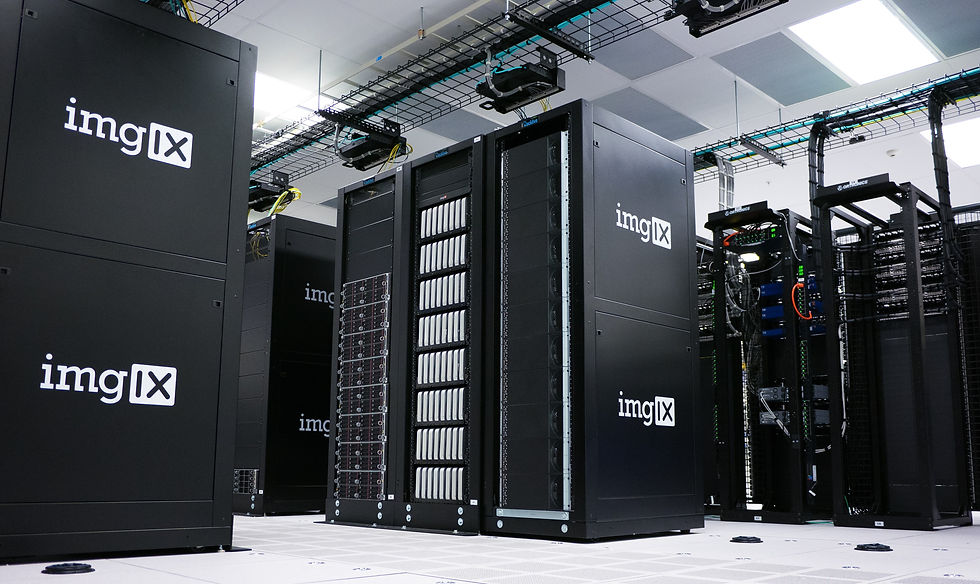
faster performance. Let's know the difference between Cloud orchestration and DevOps orchestration. Cloud orchestration is a workflow process to deliver resources as a service with Automation. On the contrary, DevOps orchestration collaborates the entire management team's practices and uses automation tools to utilize the product result. Orchestration service is essential in DevOps because its automation tools give the ultimate efficiency. There is an excellent question: why are we calling it Orchestration and not Automation? Because these two topics are different but similar concepts. Generally, Automation represents automating a single task where Orchestration can automate a process or workflow that involves many tasks through multiple systems. As simple, Automation is enclosed to establish one job to run on its own as individual and basic tasks that are basically programmed in microservices. On the other hand, Orchestration is a broad collaboration of automated tasks. DevOps offers Orchestration to deploy applications faster. Moreover, Automation in the Orchestration makes business cost-effective with low interaction of person and system instead and uses a variety of applications to decrease cost, complexity, and bugs.

For DevOps, orchestration is used in SDLC; the System development life cycle is a process for planning, creating, testing, and deploying a system such as software development life cycle or application development lifecycle. The SDLC is the blueprint for the entire project, which is made by the project manager which includes seven phases: planning, analysis, design, development, testing, implementation, and maintenance. It is a framework to produce high-quality software in a structured and cost-efficient way the development teams use. This is an efficient process for both large and small software organizations. Software development lifecycle (SDLC) is used in various services such as software as a service (SaaS), platform as a service (PaaS), infrastructure as a service (IaaS), etc. UpTech Solutions also uses this process to follow development models such as Agile, Waterfall, Unified model, V Model, Spiral model, etc. Agile is one of the most practiced and best SDLC methodology in the industry. Scrum is a way to manage a project, making the software development life cycle model exceptionally different from all other SDLC models. SDLC helps to transform the whole idea of a project into a functional and operational structure.

As a novice, Container and Containerization can be a little bit confusing. To use Kubernetes it is necessary to build containers to control orchestration on servers by putting code into a container. Containers package codes to run into any machine, and code can be in any language depending on the system and installing packages from the internet, which requires specific system requirements such as data storage. In Containerization, containers keep all of the functionalities to run a program. So, instead of living in someone else's house, containers help developers create a reliable and consistent place wherever they want on servers as servers work as personal computers in clouds. In fact, with Containerization, the developers can build it by themselves to ensure the software runs properly and doesn't fail. In Containerization, two specific files are Dockerfile and Yaml file, defining what software is required to run the machine. Dockerfile controls the runtime environment and the important installation packages to run properly. On the other hand, the Yaml file handles hardware and network security requirements. Aside from understanding the framework, the outcomes need to be understood. When a container is created with the code, it constructs an image of results from the complete set

of runtime elements deployed on cloud machines and can run locally on each person's device. IT firms can benefit from Containerization in different codebases, sharing code across other systems and runtime environments, security, and versioning. Uptech Solutions provides multi-cloud platform technology as a service for DevOps Containerization such as Amazon EC2 instances, VirtualBox, Rackspace Servers so on. Here, Docker sets the level high by offering simplified version control that makes everything easy in virtualization.
On account of the support of Containerization and Orchestration on DevOps, it offers an excellent solution for any development operation. Recently, businesses are adopting cloud technology extensively and allowing everyone to run operations by having strict control over them, reducing cost and time. Several services such as Docker and Kubernetes help orchestrate containers on the cloud. Docker is the most widely used platform worldwide, an open-source container system based on runC as Amazon AWS offers Backend-as-a-Service (BaaS) that includes a Containers-as-a-Service (CaaS) to their customers with Kubernetes and the mobility of cloud computing.
Container Orchestration is perfect for any company or organization moving towards a DevOps culture where management arranges the pilot containers with your DevOps team, progresses into the Production phase, and deploy containers into the infrastructure.

Cloud services such as infrastructure as a service (IaaS), platform as a service (PaaS), and software as a service (SaaS) exist because managing servers are costly and need high security while handling most of the cloud problems. The best container Orchestration tools in 2011 are Kubernetes (K8s), Amazon Elastic Kubernetes Service (EKS), Azure Kubernetes Service (AKS), Docker platform, etc. Image source
which helps in microservices applications through multi clusters, load balancing, better environment adaptability, effortless deploying and managing, higher scalability and improved networking within the application. As container Orchestration platforms have various applications and solutions, the rapidly growing software industry must choose the right tools that suit the system architecture. So, how do you prefer? As with most appearing technologies, Container Orchestration has pros and cons depending on the architecture, HA needs, flexibility, and learning curve.


Comments